



Employment Agreements
and Restrictive Covenants
Employment agreements are often treated as a formality, until a key employee leaves, client relationships walk out the door, or a succession plan starts to unravel.
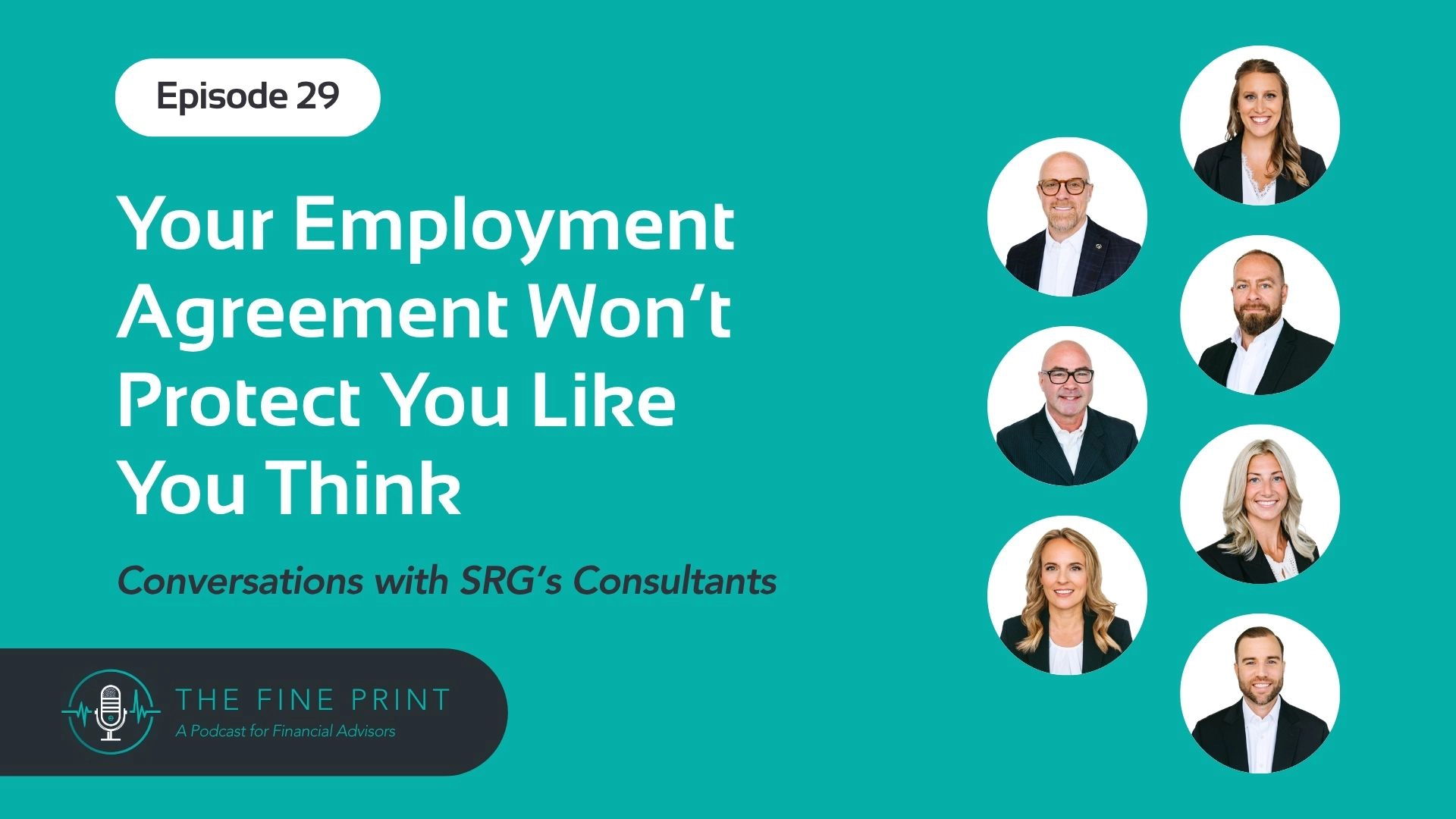
In this episode of The SRG Exchange, SRG’s consulting team and General Counsel unpack why restrictive covenants matter, what they are actually designed to do, and why the biggest risk for many firms is having no clear agreement in place at all.
You will hear how employment agreements influence everything from client retention and team stability to firm value, M&A outcomes, and internal succession planning.
Why employment agreements are more than legal paperwork
The team explains that strong agreements are not just about restriction. They create clarity around expectations, roles, and what happens if someone leaves unexpectedly.
Non-compete, non-solicit, and no-serve: what is the difference?
The episode breaks down the most common restrictive covenant provisions and why advisors often misunderstand how each one works in practice.
Why enforceability depends on reasonableness and state law
The group discusses how restrictive covenants are treated differently across jurisdictions, and why overly aggressive language often fails when challenged.
The real risk is client portability
A major theme of the conversation is that clients are not “owned,” and firms must think carefully about how to protect relationships, goodwill, and continuity without relying on unrealistic assumptions.
Buyout language matters as much as restriction language
The team highlights that many firms focus too heavily on “you can’t do this” clauses, while overlooking buyout provisions and practical exit pathways that reduce conflict.
Common mistakes advisors make with templates and outdated agreements
The episode warns against generic, one-size-fits-all employment documents that do not reflect the realities of the advisory business, especially during growth, mergers, or succession planning.
How these agreements affect firm value and transaction readiness
Restrictive covenants and employment terms play a direct role in due diligence, buyer confidence, and long-term enterprise value. Weak documentation can become deal friction at the worst possible time.
Setting expectations early prevents disputes later
The conversation closes with a reminder that agreements work best when they are implemented proactively, aligned with culture, and revisited as the firm evolves.
Who is Featured in This Episode
Key Takeaway
Entity design and maintenance are foundational. When done strategically, they make it easier to share equity, retain talent, execute transactions, and protect long-term value. When ignored, they create friction at the exact moments when a firm needs clarity the most.