
Dealing with Acquisition Risk: How Buyers and Sellers Balance Price, Terms, and Uncertainty (Ep. 36)
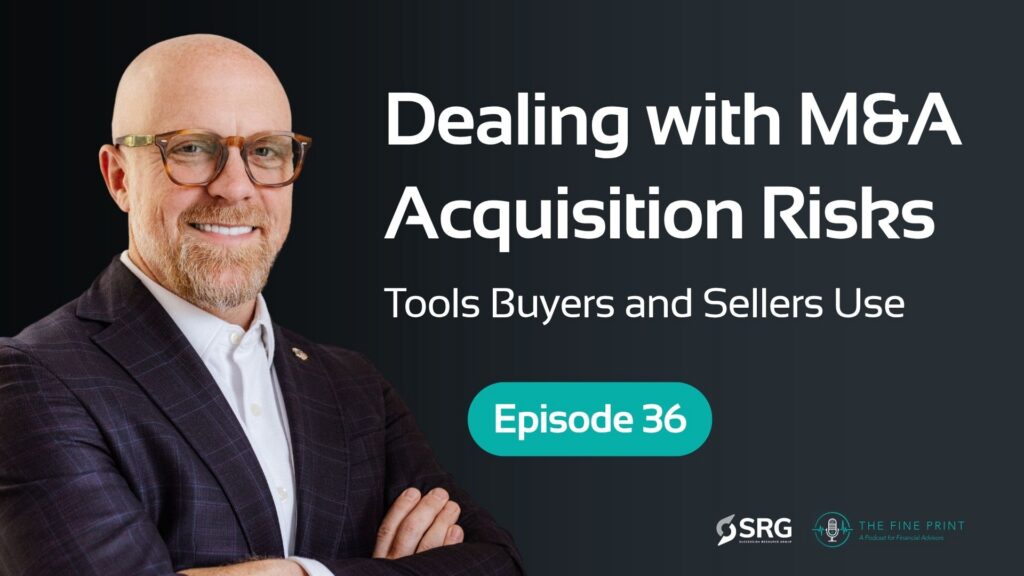
Host How Do Buyers and Sellers Account for Risk in an Advisory Deal? Every advisory firm acquisition carries risk, and the higher the purchase price, the more of that risk lands on the buyer. The tools for managing it are clawback clauses, variable payments, and specialized financing structures. Understanding which tool fits your situation is what separates a deal that works from one that unravels post-close. In this episode, David Grau Jr., drawing on more than two decades of closing advisory firm transactions, breaks down the main risk mitigation methods available to buyers and sellers today. He explains why PE-backed aggregators have become so disciplined at structuring high-multiple offers while still protecting their downside, and why any buyer can apply the same thinking. The episode closes with a simple benchmark: in a well-structured deal, both parties should walk away feeling they gave a little too much. If the seller thinks they left some value on the table and the buyer thinks they paid slightly more than they should have, the deal is probably balanced. SRG’s Transaction Advisory Services team helps buyers and sellers reach exactly that point. Key Takeaways Risk scales with price. A clawback clause is a contractual adjustment to the purchase price post-sale, triggered when retention falls below an agreed target. The higher the premium a buyer pays, the more aggressive that target typically needs to be, sometimes requiring 100% retention to justify the price. External deals carry client attrition risk. When a seller moves clients to a new firm, clients must be notified and sometimes repapered. Historically, retention rates in advisory acquisitions run at 90% or above, but on paper the risk is real and needs to be priced into the deal structure. Internal deals carry a different risk: profit erosion. Clients rarely leave in internal successions. The risk is market-driven revenue compression squeezing the margin an internal buyer needs to service their debt. Same dollar of risk, different source. PE firms use a repeatable structure that any buyer can learn from. Roughly 40 to 60% cash at closing, with the balance split between rolled equity in the acquirer and an earn-out tied to 10 to 20% growth targets over four to five years. This is how they justify premium prices while managing their downside, it is not magic, it is structure. Retention clauses have three variables. What you measure (revenue, AUM, or client headcount), when you measure it (typically 12 months post-close), and what the target is (90% for a fair-market deal, up to 100% for a premium). Every other negotiation point flows from these three. Client-based retention clauses are gaining popularity because they factor out market risk. A revenue-based clause can penalize a seller even when every client stayed, if markets dropped 15% during the measurement period. A client headcount clause separates delivery from market performance. A stretch note is an internal financing tool where buyer payments are tied to profit distributions rather than a fixed amortization schedule. If distributions are low, payments are low. The deal cannot structurally fail, making it a strong option for first-time internal buyers. The right outcome is both parties feeling slightly uncomfortable. If the seller thinks they left a little on the table and the buyer thinks they paid a little too much, the deal is probably calibrated correctly. True win-wins in M&A usually mean someone was misinformed. Frequently Asked Questions What is a clawback clause in an advisory firm acquisition? A clawback clause is a contractual provision that adjusts the purchase price after closing if client retention falls below an agreed target. It protects the buyer if clients leave following the sale. The three key variables are what you measure (revenue, AUM, or client headcount), when you measure it (typically 12 months post-close), and what retention target triggers an adjustment. What is the difference between revenue and client-based retention clauses? A revenue-based clause compares revenue one year after closing to revenue the year before. A client-based clause compares the number of households retained. The key difference: revenue is affected by market performance, so a seller can deliver all clients and still trigger an adjustment if markets decline. A client-based clause isolates the seller’s actual performance from market movement. What is a stretch note in an internal advisory firm succession? A stretch note is a seller-financing structure where the internal buyer’s payments are tied to their after-tax profit distributions rather than a fixed amortization schedule. If distributions are lower in a given period, payments are lower. This eliminates the structural risk of a buyer being unable to service debt during a down market, making it especially useful for first-time internal buyers. How do PE-backed aggregators structure their acquisitions? PE-backed aggregators typically put 40 to 60% cash down at closing. The remaining balance is split between rolled equity in the acquiring firm and an earn-out tied to hitting 10 to 20% growth targets over four to five years. This structure lets them offer headline multiples of 10x to 12x earnings while still protecting their downside if growth targets are not met. How long is a typical retention period in an advisory acquisition? The most common measurement window is 12 months following the close of the transaction. Eighteen months is occasionally used. Retention periods longer than 18 months are rare, because client attrition beyond that point is generally not attributable to the transition itself. Hosted By David Grau Jr., MBA (Founder / CEO)
To PE or Not to PE: What Every Advisor Should Know About Private Equity Offers (Ep. 35)

When Private Equity Calls: A Guide for Advisors Private equity has officially moved downstream. PE-backed aggregators that once targeted billion-dollar firms are now writing offers for practices with $150 million to $500 million in AUM, and many advisors are receiving these offers without having gone looking for them. In this episode, David Grau Jr, MBA. and Kristen Grau, CPA, CVA, CEPA cut through the headlines to explain what a PE-backed deal actually looks like from the inside. The conversation covers who these buyers are, how they structure offers, and why the classic idea of “selling and retiring” often does not fit the PE model. David and Kristen walk through financial normalization, recurring revenue debates, P&L preparation, and the often-overlooked reality that time kills deals. If you have ever been approached by a PE-backed firm, or think you might be, this episode gives you the framework to evaluate the offer clearly. SRG works exclusively alongside sellers in the M&A process, helping advisors get the right offers in front of the right buyers. Whether you received an unsolicited offer last week or you are thinking three to five years ahead, now is the time to understand the landscape. Show Notes PE-backed aggregators vs. direct PE: Direct PE investment goes to large enterprises (typically multiple billions in AUM). PE-backed aggregators have already taken that investment and are deploying it through acquisitions of firms as small as $150M to $250M in AUM. The seller profile is shifting: PE buyers want firms they can grow. The new seller profile is 50 to 70 years old — someone still willing to work and grow, not ready to retire in 12 months. Big multiples come with conditions: PE buyers may quote 10x to 12x earnings, but achieving that figure typically requires staying on for three to five years and hitting specific growth targets above current trajectory. Normalization can shrink your effective multiple: If you plan to leave post-sale, PE buyers add replacement comp back into expenses — often 25% to 35% of revenue — reducing normalized earnings and the effective payout. Know your numbers: Experienced buyers will cross-reference reports and look at client-level data. Sellers who do not know their numbers give buyers leverage to negotiate down. Clean your P&L before going to market: Remove owner-discretionary expenses, get onto a consistent tech stack, and track your financials quarterly for three to five years before selling. Best price or best terms — rarely both: A high purchase price often means more back-end risk and longer commitments. A lower cash deal with clean terms and a shorter transition may serve some sellers better. When you get an offer, pause: PE buyers are disciplined and experienced. They will create urgency. Pause, shop the offer, and call SRG before signing anything. Hosted By David Grau Jr., MBA (Founder / CEO) Kristen Grau, CPA, CVA, CEPA
Advisor Compensation: How to Pay Your Team the Right Way (Ep. 34)
The Compensation Conversation Your Firm Needs to Have Compensation is one of the most consequential levers in an advisory firmm and one of the most misunderstood. For years, firm owners relied on industry surveys to benchmark pay. Most of those resources are gone, and the ones that remain are pulling from data that is neither vetted nor reliable. At the same time, the firms themselves have grown and changed faster than their compensation models have. In this episode of The Fine Print, David Grau Jr. sits down with Julia Sexton, CVA, Director of Team Solutions at SRG, to work through what modern compensation design actually looks like for advisory firms. The conversation starts with benchmarking, where to find accurate data and why survey-based studies fall shortm and builds into a practical framework for structuring pay around the goals you have for your business, not just what the firm next door is doing. Julia walks through why production-based compensation creates silos even in firms that say they want collaboration, how to design different structures for farmers and hunters on your team, and why grid-based payouts that grow with market appreciation without added work put a slow choke hold on your margins and your firm’s value. The episode also covers eligibility criteria, career path design, and how to back-test any compensation change before rolling it out so your team barely notices the difference. Show Notes Compensation is the most powerful lever in an advisory firm — and one of the least examined. When the go-to industry benchmarks disappeared, many owners kept running compensation models they inherited from the wirehouse era without stopping to ask whether those models still fit where their business is headed. The data problem no one is talking about. The Investment News compensation study that the industry relied on for years is gone. What replaced it pulls from government sources with small, unvetted sample sets. SRG built its Talent Strategy Report from thousands of actual valuations, scrubbed, reviewed, and confirmed, because survey data and evaluation data are not the same thing. Location and firm size matter less than you think. Geographic pay premiums have largely flattened in a remote-first world. Firm size affects specialization of roles more than raw compensation levels. A smaller firm may actually pay more because fewer people are wearing more hats. There is no right compensation model, only the right one for your goals. Before designing anything, owners need an honest conversation about what kind of business they are building. An ensemble model built for scalability and enterprise value requires a fundamentally different compensation structure than a siloed model built around individual books. Production-based compensation creates silos, even in firms that call themselves a team. If advisors are paid on individual revenue, they will optimize for individual revenue. The incentive and the stated goal are working against each other, and compensation always wins. Farmers and hunters need different structures, not just different amounts. Farmers should be incentivized on assets serviced, net flows, and client satisfaction. Hunters should be rewarded for new business brought in. Putting a farmer’s compensation model on a hunter, or vice versa, produces exactly the wrong behavior. Grid-based payouts quietly destroy firm value. An advisor managing the same 100 households gets paid double seven years later because markets appreciated. The workload did not change. The complexity did not change. That margin erosion compounds over time and makes internal succession nearly impossible to structure. The BBP model: base, bonus, and profit. Splitting compensation into three buckets creates stability through salary, drives individual performance through bonusing, and aligns the team around long-term firm success through profit participation. Eligibility criteria, including fee schedule compliance, training, and client satisfaction scores, determine who gets access to the bonus bucket in a given year. Career path design is a capacity strategy. Progressively raising the minimum client tier an advisor is responsible for, and reducing their payout on smaller accounts, creates a natural delegation structure. Founders do not need to recruit expensive lateral hires. They need a junior advisor at the bottom of the org chart so everyone above them can move up. Back-test before you roll anything out. Run the new model against what your team actually made last year. If the output looks dramatically different, calibrate the levers before you announce anything. The goal is for the transition to feel like continuity, not a renegotiation. Hosted By David Grau Jr., MBA (Founder / CEO) Julia Sexton, CVA (Director of Strategic Organizational Planning)
The Exchange: Selling Your Advisory Business and What Every Owner Needs to Know (Ep. 33)
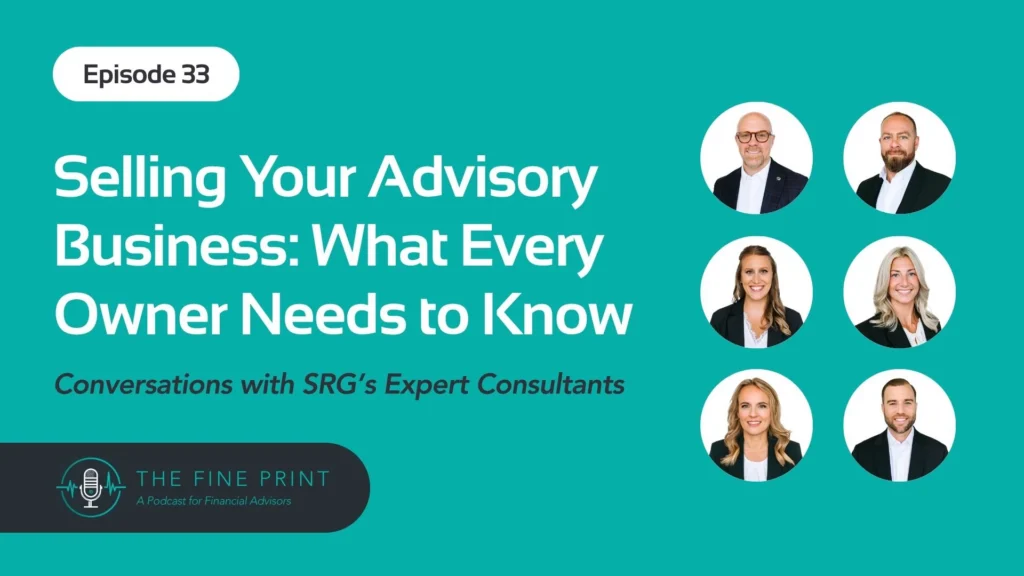
Navigating the Noise When It’s Time to Sell When you decide to sell your advisory business, you will be approached from every direction; aggregators, PE firms, broker dealers, and peers all ready to make an offer. The question isn’t whether demand exists. It’s whether you have the right team to make sure you’re getting the most out of it. In this episode of The Fine Print, David Grau Jr., MBA is joined by Kristen Grau CPA, CVA, CEPA, Parker Finot, and Ryan Grau CVA, CBA to break down what seller advocacy really means, where self-negotiated deals tend to fall short, and what advisors should look for when choosing an intermediary. You will hear why great offers never show up in the first draft, what the “auction” label gets wrong about the listing process, how some intermediaries secretly work both sides of the deal, and why getting a valuation three years before you’re ready to sell can change everything. Show Notes The noise every seller has to cut through. Aggregators, PE firms, broker dealers, peer buyers, and DIY platforms are all competing for your attention. The real question isn’t which offer to take — it’s whether you have the right expertise on your side to evaluate them properly. The risks of going it alone. Self-negotiated deals often skip NDAs, skip proper due diligence, and rely on one-page agreements that banks won’t underwrite. Sellers narrow their options to one or two familiar names and leave significant value on the table before negotiations even begin. Fit vs. price: the conversation has shifted. The industry long put fit above everything else. That’s changing. Price, terms, and taxes are increasingly driving decisions — and advisors who sell to the first familiar face often sacrifice all three without realizing it. Great offers never show up in the first draft. Eye-catching multiples often mask back-end payments tied to growth targets the seller has never come close to hitting. Knowing what to look for — and what questions to ask — is the difference between a good deal and a great one. The “auction” label is a buyer’s talking point. What sellers call a listing process, buyers call an auction to make it sound unappealing. In reality it is a confidential, structured process that lets sellers compare qualified buyers, protect their identity, and make a decision based on actual fit rather than whoever showed up first. Not all intermediaries are working for you. Some firms charge sellers a retainer while simultaneously collecting fees from buyers — limiting the pool presented and skewing the outcome. Ask who your intermediary is getting paid by and how many times they have transacted with the same buyers. Get your valuation done three years out. Waiting until you are ready to sell leaves no runway to improve your numbers, clean up your financials, or understand your KPIs. A valuation three years prior gives you time to act on what it tells you. Your business is your most valuable asset. Whether you plan to sell in two years or ten, giving the process the time and attention it deserves — with the right team in your corner — is one of the most consequential decisions you will make for yourself, your clients, and your family. Hosted By David Grau Jr., MBA (Founder / CEO) Kristen Grau, CPA, CVA, CEPA (Executive Vice President) Ryan Grau, CVA (Director of Valuations) Parker Finot (Director of Transaction Advisory Services)
What to Expect from M&A in 2026 (Ep. 32)
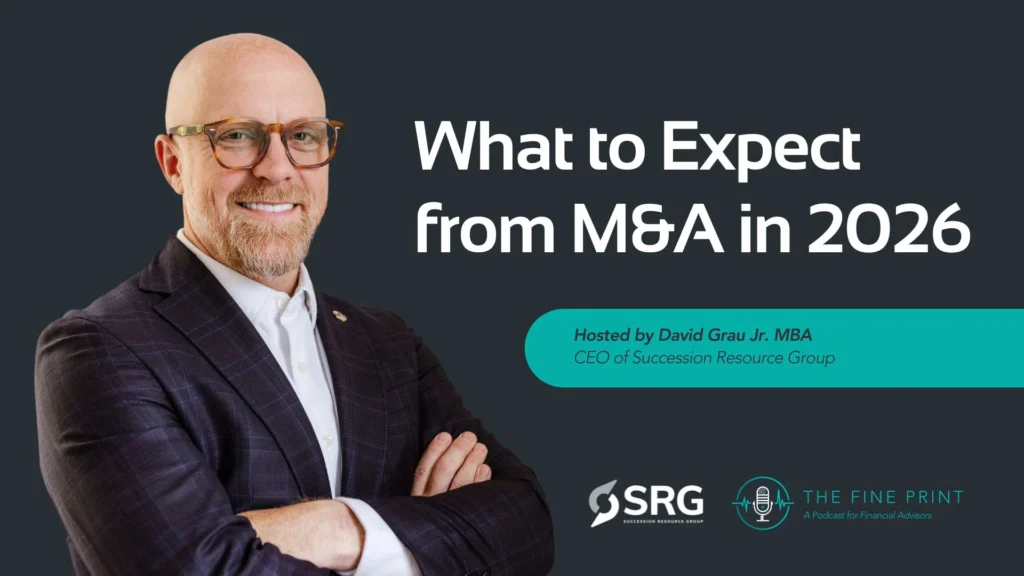
What to Expect from M&A in 2026 Valuations are at record highs, private equity is changing the game, and deal structures look nothing like they did five years ago. In this episode of The Fine Print, David Grau Jr. digs into the real numbers from 2025 and breaks down what they mean for advisors navigating M&A in 2026. Show Notes RIA valuations continue climbing. Revenue multiples averaged 3.27x in 2025, with 38% of deals closing above 3.5x. EBITDA multiples have reached nearly 10x. But higher valuations are coming with different terms than the industry is used to. Higher profits do not always mean higher multiples. Firms with 45-50% margins often get lower multiples (6-7x EBITDA) because those margins signal underinvestment. The firms earning 11-13x are the ones reinvesting in staff, capacity, and growth — even though their margins sit closer to 25-30%. Private equity is moving downstream. PE-backed aggregators are now making offers to firms doing as little as $2 million in revenue. The typical deal structure: 40% cash at close, 30% performance-based payments (tied to 10-20% CAGR targets), and 30% rolled equity in the aggregator. The headline multiple is not the whole story. A 12x or 13x offer from PE sounds compelling, but only about 40% arrives as cash at closing. The rolled equity may be illiquid and aggressively valued. The real question: five years post-closing, did you actually come out ahead? Internal equity sales hit record highs. Nearly a third of all transactions in 2025 were internal fractional sales — up from single digits historically. Financing was split roughly 50/50 between seller-financed and externally financed deals. Phantom equity is surging. Stock appreciation rights (SARs) and liquidation rights are becoming mainstream succession tools, even for firms as small as $2 million in revenue. They help attract and retain talent, seed the next generation with economic value, and make future partners more bankable when it comes time to buy in. Compensation models are shifting. Larger advisory enterprises are moving away from grid-based payouts toward base-salary-plus-bonus structures that better fit service-oriented teams. Deal volume is expected to rise. Elevated multiples and increased PE activity are pulling more advisors off the fence. If you are a buyer, get your house in order. If you are a seller, treat your business like a home going on the market — make sure the curb appeal is there. Hosted By David Grau Jr., MBA (Founder / CEO)
The Exchange: What Advisory Firm Owners Get Wrong About M&A (Ep. 31)
What Advisory Firm Owners Get Wrong About M&A M&A activity in the financial advisory space continues to reach new highs, but many firm owners are entering deals with assumptions that quietly cost them time, money, and negotiating leverage before they have even started. In this episode of The SRG Exchange, David Grau Jr. leads SRG’s consulting team and General Counsel through a candid conversation on what firm owners consistently get wrong about M&A, from when to involve an outside team to how valuation methodology, entity structure, and equity sharing all factor into a successful outcome. You will hear why showing up “80% done” often means you have not really started, how appraised value and sale price are not the same thing, where market multiples landed in 2025, and why entity planning and equity sharing have become essential considerations for advisory firms of nearly every size. Featured in This Episode David Grau Jr., MBA (Founder / CEO) Parker Finot (Director of Transaction Advisory Services) Kristen Grau, CPA, CVA, CEPA (Executive Vice President | Seller Advocacy) Ryan Grau, CVA, CBA (Director of Valuations) Nicole Frey, CFP® (Director of Team Solutions) Julia Sexton, CVA (Director of Strategic Organizational Planning)
The SEC’s Marketing Rule Sweep: Endorsements in Advisor M&A (Ep. 30)
Endorsements and the SEC Marketing Rule in Advisor M&A Regulatory scrutiny is evolving, and RIAs involved in acquisitions or succession transitions are starting to see a new area of exam focus: how the SEC’s Marketing Rule endorsement provision may apply to certain client transition communications. In this episode of The Fine Print, Todd Fulks, JD is joined by Christine Ayako Schleppegrell, Partner at Morgan Lewis and former SEC attorney, for a timely discussion on what firms are seeing in exams and deficiency letters, and why this issue is emerging now. You will hear how a rule many advisors associate with testimonials and advertising is beginning to surface in the M&A transition context, and what firms can do to stay prepared. Featured in This Episode Todd Fulks, JD Christine Ayako Schleppegrell (Partner, Morgan Lewis; Former SEC Attorney) Guest
The Exchange: Your Employment Agreement Won’t Protect You Like You Think (Ep. 29)

Employment Agreements and Restrictive Covenants Employment agreements are often treated as a formality, until a key employee leaves, client relationships walk out the door, or a succession plan starts to unravel. In this episode of The SRG Exchange, SRG’s consulting team and General Counsel unpack why restrictive covenants matter, what they are actually designed to do, and why the biggest risk for many firms is having no clear agreement in place at all. You will hear how employment agreements influence everything from client retention and team stability to firm value, M&A outcomes, and internal succession planning. Why employment agreements are more than legal paperwork The team explains that strong agreements are not just about restriction. They create clarity around expectations, roles, and what happens if someone leaves unexpectedly. Non-compete, non-solicit, and no-serve: what is the difference? The episode breaks down the most common restrictive covenant provisions and why advisors often misunderstand how each one works in practice. Why enforceability depends on reasonableness and state law The group discusses how restrictive covenants are treated differently across jurisdictions, and why overly aggressive language often fails when challenged. The real risk is client portability A major theme of the conversation is that clients are not “owned,” and firms must think carefully about how to protect relationships, goodwill, and continuity without relying on unrealistic assumptions. Buyout language matters as much as restriction language The team highlights that many firms focus too heavily on “you can’t do this” clauses, while overlooking buyout provisions and practical exit pathways that reduce conflict. Common mistakes advisors make with templates and outdated agreements The episode warns against generic, one-size-fits-all employment documents that do not reflect the realities of the advisory business, especially during growth, mergers, or succession planning. How these agreements affect firm value and transaction readiness Restrictive covenants and employment terms play a direct role in due diligence, buyer confidence, and long-term enterprise value. Weak documentation can become deal friction at the worst possible time. Setting expectations early prevents disputes later The conversation closes with a reminder that agreements work best when they are implemented proactively, aligned with culture, and revisited as the firm evolves. Who is Featured in This Episode David Grau Jr., MBA Julia Sexton (Sullivan), CVA Ryan Grau, CVA, CBA Kristen Grau, CPA, CVA, CEPA Parker Finot Key Takeaway Entity design and maintenance are foundational. When done strategically, they make it easier to share equity, retain talent, execute transactions, and protect long-term value. When ignored, they create friction at the exact moments when a firm needs clarity the most.
The Exchange: Entity Structure and Why It’s The Backbone of Your Advisory Firm (Ep. 28)
Entities and Entity Maintenance Entity structure is not just a legal formality. It plays a major role in how an advisory firm grows, shares ownership, and transitions leadership. In this episode of The SRG Exchange, SRG’s consulting team and general counsel unpack why entities have moved from a “set it and forget it” task to a core piece of business strategy. You will hear how entity decisions influence everything from equity sharing and internal succession to mergers, lending, disputes, and value building. Why entities are now strategic, not administrative The team discusses how entities used to be treated as a quick setup for liability and taxes, but have become foundational for firms with growth plans, W2 employees, equity sharing, and long-term succession goals. Why entities are now strategic, not administrative The team discusses how entities used to be treated as a quick setup for liability and taxes, but have become foundational for firms with growth plans, W2 employees, equity sharing, and long-term succession goals. Entity structure supports retention and equity pathways A properly structured entity can create divisible ownership units or shares, enabling retention strategies and giving next-gen leaders a pathway to buy, earn, or convert into real equity. S-corp versus LLC taxed as partnership The group compares the tradeoffs of rigidity and flexibility across entity types. An S-corp can be effective in specific scenarios, but many firms pursuing mergers or complex ownership structures benefit from the flexibility of an LLC taxed as a partnership. Entity structure impacts M&A, mergers, and equity swaps Entities do not only matter for succession and equity sharing. They also shape peer-to-peer acquisitions, mergers, partner buyouts, and equity swaps. Poor structure or conflicting agreements can reduce tax strategy options and create deal friction. Why entity maintenance matters Entity documents need to reflect reality. The team shares how outdated operating agreements and inconsistent ownership schedules can create serious issues during valuations, due diligence, disputes, or even basic financing. What maintenance actually includes Maintenance is more than annual state filings. It includes documenting changes, capturing ownership updates, maintaining minutes, and ensuring titles and governance terms stay consistent over time. The real risk: it is not an issue until it is The group explains why entity problems often stay hidden until a triggering event happens, such as an owner dispute, a loan request, a merger, or litigation. When that happens, outdated documents become evidence. In the context of succession planning Rather than doing entity work in isolation, the team recommends aligning structure with the firm’s goals first. That includes what the founder wants to do long-term, whether the path is internal succession, external sale, mergers, or ensemble building. Who is Featured in This Episode Nicole Frey, CFP® David Grau Jr., MBA Julia Sexton (Sullivan), CVA Ryan Grau, CVA, CBA Kristen Grau, CPA, CVA, CEPA Parker Finot Key Takeaway Entity design and maintenance are foundational. When done strategically, they make it easier to share equity, retain talent, execute transactions, and protect long-term value. When ignored, they create friction at the exact moments when a firm needs clarity the most.
The Exchange: The Truth About Advisor Contingency Planning (Ep. 27)
Advisor Contingency Planning In the first-ever episode of The SRG Exchange, SRG’s consulting team comes together for a candid discussion on one of the most overlooked and essential components of running a financial advisory firm: contingency planning. Drawing from real client experiences and day-to-day advisory work, the team breaks down what advisors often misunderstand, what regulators actually expect, and what a truly functional continuity plan must include. This conversation sheds light on the operational, legal, and relational challenges that surface when a plan fails, and offers practical steps to help advisors protect clients, revenue, and family long before an emergency occurs. Why Contingency Planning Still Falls Short The episode opens with a direct reality check. While nearly every advisor knows they should have a contingency plan, very few have one that would truly work under pressure. The team discusses common gaps they see across the industry, including: plans that exist only on paper and do not reflect firm reality unclear successor instructions incorrectly structured agreements that fail when tested BD or custodian forms mistaken for full plans They explain why these gaps become critical risks, not just for compliance, but for clients, staff, and family members who are left scrambling. Understanding What a Real Plan Looks Like From valuation considerations to internal decision-making authority, the team outlines the building blocks of a functional, actionable plan. Key insights include: why a contingency plan must tie directly to a firm’s legal entity structure the importance of identifying who actually has the authority to take over why buy-sell agreements are not always enough how entity maintenance impacts continuity readiness the role of service agreements, compensation, and communication plans The takeaway is clear. Effective contingency planning is not one-size-fits-all. It must be tailored to the firm’s ownership structure, internal roles, and growth stage. Lessons From the Field The discussion includes real scenarios pulled from SRG’s consulting work, including both successes and cautionary tales. Advisors will hear: what happens when documentation does not match operational reality how unexpected disability or death can affect valuation and transition options why even well-intentioned plans break down during crisis how firms that plan proactively preserve value and avoid chaos These examples ground the conversation in real-world impact and show exactly how preparation, or lack of it, plays out. Practical Guidance for Advisors The team shares tangible steps advisors can take to strengthen or build their plan, including: conducting a full review of existing agreements validating successor roles and responsibilities documenting operational continuity steps maintaining updated books, records, and entity documents ensuring clients know the firm has a plan in place They also discuss how often plans should be revisited, and why regular maintenance matters just as much as initial creation. Conclusion: Protecting What Matters Most The episode closes with a reminder that contingency planning is not just a compliance requirement. It is a fiduciary responsibility. By proactively addressing these issues, advisors protect their clients, their staff, the value of their firm, and the people they care about. The key takeaway: a contingency plan is not complete until it works in real life, under real pressure. Advisors who invest the time to get this right are better positioned to navigate the unexpected and maintain stability for their business and everyone who depends on it. Who is Featured in This Episode Nicole Frey, CFP® David Grau Jr., MBA Julia Sexton (Sullivan), CVA Ryan Grau, CVA, CBA Kristen Grau, CPA, CVA, CEPA Parker Finot