
The Exchange: The Truth About Advisor Contingency Planning (Ep. 27)
Advisor Contingency Planning In the first-ever episode of The SRG Exchange, SRG’s consulting team comes together for a candid discussion on one of the most overlooked and essential components of running a financial advisory firm: contingency planning. Drawing from real client experiences and day-to-day advisory work, the team breaks down what advisors often misunderstand, what regulators actually expect, and what a truly functional continuity plan must include. This conversation sheds light on the operational, legal, and relational challenges that surface when a plan fails, and offers practical steps to help advisors protect clients, revenue, and family long before an emergency occurs. Why Contingency Planning Still Falls Short The episode opens with a direct reality check. While nearly every advisor knows they should have a contingency plan, very few have one that would truly work under pressure. The team discusses common gaps they see across the industry, including: plans that exist only on paper and do not reflect firm reality unclear successor instructions incorrectly structured agreements that fail when tested BD or custodian forms mistaken for full plans They explain why these gaps become critical risks, not just for compliance, but for clients, staff, and family members who are left scrambling. Understanding What a Real Plan Looks Like From valuation considerations to internal decision-making authority, the team outlines the building blocks of a functional, actionable plan. Key insights include: why a contingency plan must tie directly to a firm’s legal entity structure the importance of identifying who actually has the authority to take over why buy-sell agreements are not always enough how entity maintenance impacts continuity readiness the role of service agreements, compensation, and communication plans The takeaway is clear. Effective contingency planning is not one-size-fits-all. It must be tailored to the firm’s ownership structure, internal roles, and growth stage. Lessons From the Field The discussion includes real scenarios pulled from SRG’s consulting work, including both successes and cautionary tales. Advisors will hear: what happens when documentation does not match operational reality how unexpected disability or death can affect valuation and transition options why even well-intentioned plans break down during crisis how firms that plan proactively preserve value and avoid chaos These examples ground the conversation in real-world impact and show exactly how preparation, or lack of it, plays out. Practical Guidance for Advisors The team shares tangible steps advisors can take to strengthen or build their plan, including: conducting a full review of existing agreements validating successor roles and responsibilities documenting operational continuity steps maintaining updated books, records, and entity documents ensuring clients know the firm has a plan in place They also discuss how often plans should be revisited, and why regular maintenance matters just as much as initial creation. Conclusion: Protecting What Matters Most The episode closes with a reminder that contingency planning is not just a compliance requirement. It is a fiduciary responsibility. By proactively addressing these issues, advisors protect their clients, their staff, the value of their firm, and the people they care about. The key takeaway: a contingency plan is not complete until it works in real life, under real pressure. Advisors who invest the time to get this right are better positioned to navigate the unexpected and maintain stability for their business and everyone who depends on it. Who is Featured in This Episode Nicole Frey, CFP® David Grau Jr., MBA Julia Sexton (Sullivan), CVA Ryan Grau, CVA, CBA Kristen Grau, CPA, CVA, CEPA Parker Finot
Contingency Agreement Types: Protect What Matters Most

Secure Continuity, No Matter What. Overview Contingency planning at SRG is a proactive service designed for business owners who want to (and should want to) protect their firm and clients in the event of a triggering event (e.g., death, disability, or incapacity). These services help ensure business continuity by creating a customized transition or sale plan that outlines what will happen and who will take over. At Succession Resource Group, our team helps you choose the key features and details of a contingency plan to create a realistic and achievable contingency plan for your team, clients, and family, as well as the most appropriate type of agreement to achieve your unique goals. This article explains what contingency agreements you might consider implementing. Most Common Agreement Types Buy-Sell Agreement (One Way) Nature: A contractual obligation to purchase / sell upon a triggering event (e.g., death, disability, or incapacity). The contingency agreement itself does not represent the purchase / sale documentation; however, it defines who, when, at what price, and what terms the purchase will occur. Purpose: Ensures commitment and prioritization without finalizing a sale. Best For: Business owners who want a transition plan to protect their clients and business value with minimal disruption, and who have a willing buyer to name in such an agreement. Reciprocal Buy-Sell Agreement Nature: A mutual agreement where two firms (or individuals) agree to buy each other’s business if a triggering event (e.g., death, disability, or incapacity) occurs in either. Purpose: Provides peace of mind and shared protection between similarly situated firms. Reciprocal buy-sell agreements ensure commitment and prioritization without finalizing a sale. Best For: Business owners who have a mutual agreement to the terms of a transition plan to protect their clients and business value with minimal disruption. Retainer Agreement Nature: A service arrangement between the business owner(s) and Succession Resource Group (SRG), where SRG is contractually obligated to find a suitable buyer in the event of a triggering event (e.g., death, disability, or incapacity) to purchase your business. Purpose: Provides peace of mind to business owners who don’t have a contingency partner identified, but want to ensure their clients and business will be protected with minimal disruption. Best For: Business owners who want a backup plan with minimal disruption but don’t have a willing buyer to name in such a plan.
Contingency Planning FAQ

What is a contingency plan? A contingency plan is an agreement between two or more advisors designed to protect your business in case of your death, disability (temporary or permanent), loss of license, and possibly even retirement (although most plans do not deal with succession planning). There are a variety of plan types to solve for these issues:
Carrot and the Stick | Protecting Your Advisors and Clients (Ep. 22)
Contingency Planning – A key to acquisition success?!

Introduction To start with, let’s define the term “Contingency Planning.” Contingency Planning is specifically referred to you creating a plan (a contract) that defines what to do with your business in case of your death or disability (temporary or permanent). Given the regulatory environment you exist within as a financial advisor, and the limitations that FINRA’s continuing commission policy places on you (IM-2420-2), it is prudent to come right out and say it – YOU NEED A PLAN. And not just for the obvious reason of taking care of your clients and extracting the value your family deserves. A contingency plan can be the key to a successful acquisition. Here are two major reasons: 1. Most advisor sales/acquisitions have all or a part of the purchase price that is seller financed on an earn-out, promissory note, or combination of the two. This means the seller is going to loan you money over some period of years. They WILL require that you have a plan in case something happens two years into the deal, and insurance is only part of the solution. They want to know that you are a responsible business owner and have a plan for your own business, so they can rest assured that if something happens, your clients (and theirs) will be left in good hands (and that the balance of the note/earn-out will be paid). 2. Contingency planning is a fantastic way to build your acquisition pipeline. If you asked 100 advisors who are over the age of 60 about selling their practice to you, statistically you might get lucky and find one that is interested in talking. However, if you asked the same 100 advisors about their contingency situation, you’d find that most know they should have a plan in place, but don’t. If you asked them about working together to create some type of death/disability plan, you will get a lot more positive responses. So how does that turn into an acquisition? When I help advisors create these types of plans, my first recommendation is to communicate the plan to the key stakeholders (i.e. the clients, OSJ, BD, spouses, etc.). Once the clients have been told about you and your role the contingency partner, you will be the first person the advisor thinks of when its time to start slowing down. I have helped many of my clients create two or three of these plans each year, and I can tell you this strategy pays dividends. It will take time, but it is a valuable part of the acquisition strategy. It also provides a great service for the advisors you create a plan with, because the alternative (dying without a plan) makes for a very unfortunate story.
The Ins and Outs of Contingency Planning

https://youtu.be/sOEovR3aKQo In such an uncertain and trying time, it is more important than ever to have a plan for the unexpected, and that your beneficiaries receive value for your book of business in the event of death, loss of license, or short-term/long-term disability. This is such a critical issue that SRG is making contingency agreement templates available at NO cost – join the webinar to find out how to access the agreements. This session will provide advisors best practices for contingency planning and specific recommendations for your existing plan, or to help you create one: Who should the plan be set up with and what if you don’t have someone? Consequences of not having a plan! How plans are funded, beyond the basics Why you should start by valuing your business Unexpected benefits of having a plan in place Industry best practices and compliance considerations Speakers David Grau Jr., MBA Founder & President Succession Resource Group Nicole Frey, CFP® Senior Project Coordinator Succession Resource Group
Best Practices: Creating a Business Death/Disability Plan
What would happen to your business, your clients and the value of the company, if something where to happen to you suddenly? Do you have a plan and systems in place to ensure your business will carry on until you return? Or, a plan to ensure the business continues under someone else’s leadership if you cannot return?
A How-To Guide For Protecting Your Business
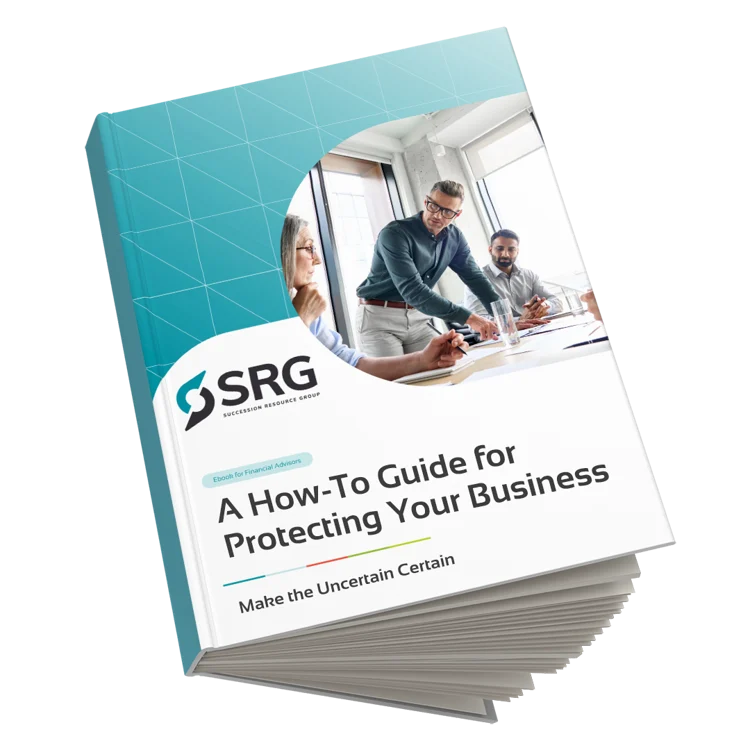
Download Your eBook! Please enable JavaScript in your browser to complete this form.Please enable JavaScript in your browser to complete this form. Name * FirstLast Phone Work Email *How Did You Hear About SRG? *— Select Choice —ConferenceDirect MailExisting/Past ClientGoogle AdWordsOtherReferralSocial MediaSeminar/WorkshopWebinarWebsite Download As an advisor, one of the most important elements to protect you, your clients, and your business is to create a plan in case of your untimely death/disability/loss of license. It will ensure your clients are taken care of in your absence and your family receives the value of your business compliantly. As a result, the process of contingency planning and the creation of a viable contingency agreement are crucial steps to plan for the unexpected. Only a small fraction of advisors, agents, and accountants have a plan and/or agreement in place to provide solutions should something happen to them unexpectedly – yet everyone should have one. There are several types of plans, some simple, some more complex, and a multitude of issues beyond the actual agreement to consider. Our guide, “A How-To Guide for Protecting Your Business,” explains why a contingency plan is needed for every advisor and describes the most common types of contingency agreements, the benefits, and drawbacks of each, how value is determined and funding is secured, as well as strategies to get started.
Contingency Planning Checklist

Make the Uncertain Certain. As an advisor, one of the most important things for you, your clients and your business, is to create a plan in case of your untimely death/disability/loss of license. This will ensure your clients are taken care of in your absence and that your receives the value of your business compliantly. Creating a contingency agreement is a crucial step to planning for the unexpected – but it isn’t the only step. One of the most overlooked elements to create a viable contingency plan to ensure your business lives on beyond you, is to have considered the operational elements of transferring a business quickly and in your absence. Our Contingency Planning Checklist identifies the most critical items advisors should be thinking about and preparing for now. Download Your Checklist! Please enable JavaScript in your browser to complete this form.Please enable JavaScript in your browser to complete this form. Name * FirstLast Phone Work Email *How Did You Hear About SRG? *— Select Choice —ConferenceDirect MailExisting/Past ClientGoogle AdWordsOtherReferralSocial MediaSeminar/WorkshopWebinarWebsite Download